Why has office development in Prague slowed down? Two key trends behind the decline
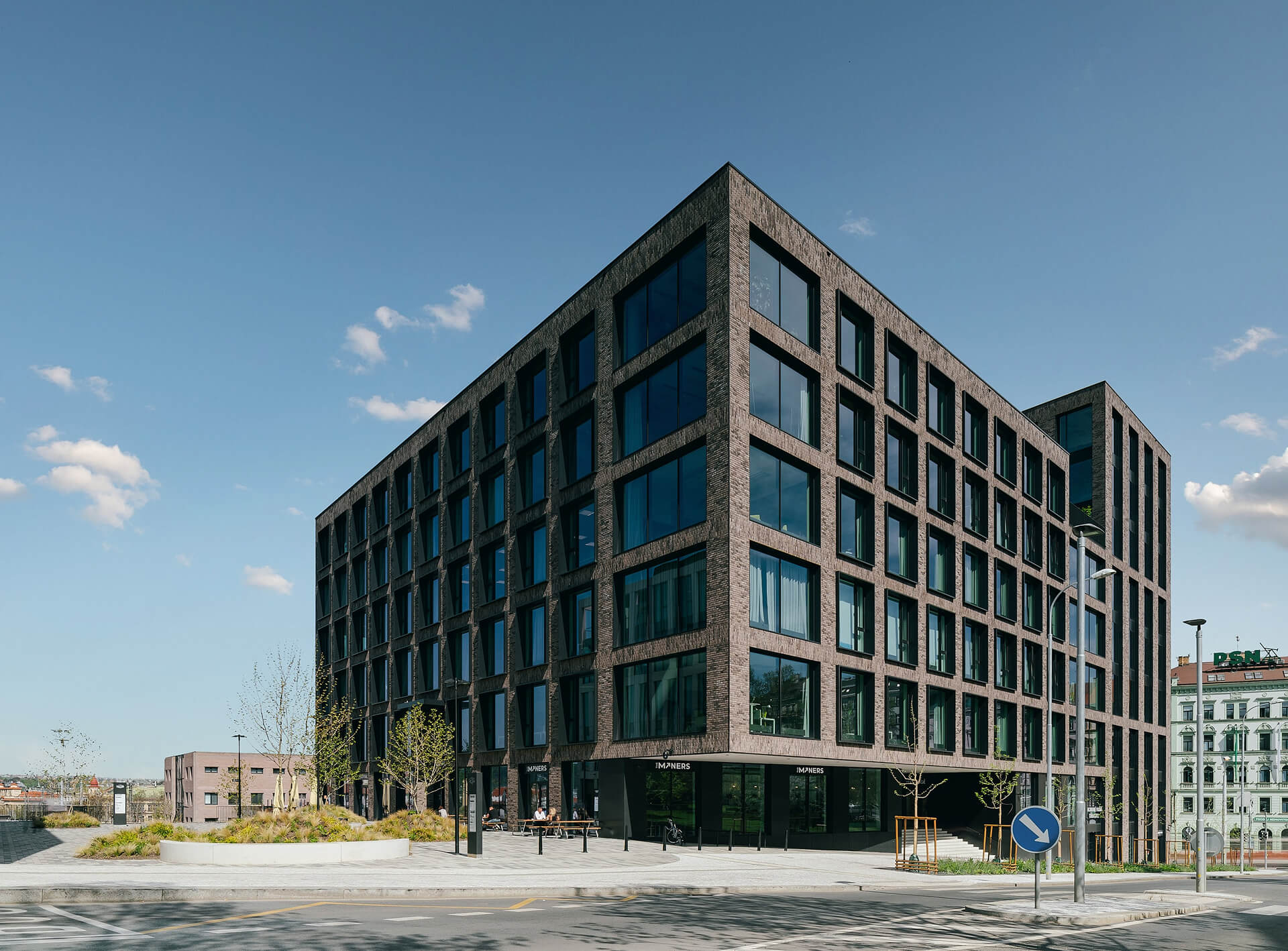
Prague’s office market is experiencing a significant slowdown in new development. According to an analysis by Knight Frank, only 36,700 sqm of new office space is expected to be completed this year. That roughly corresponds to two mid-sized buildings or, for example, an entire complex such as Churchill Square. At the same time, the supply of brownfield sites in attractive locations suitable for development is rapidly diminishing. Those that remain are increasingly being converted by developers into residential projects.
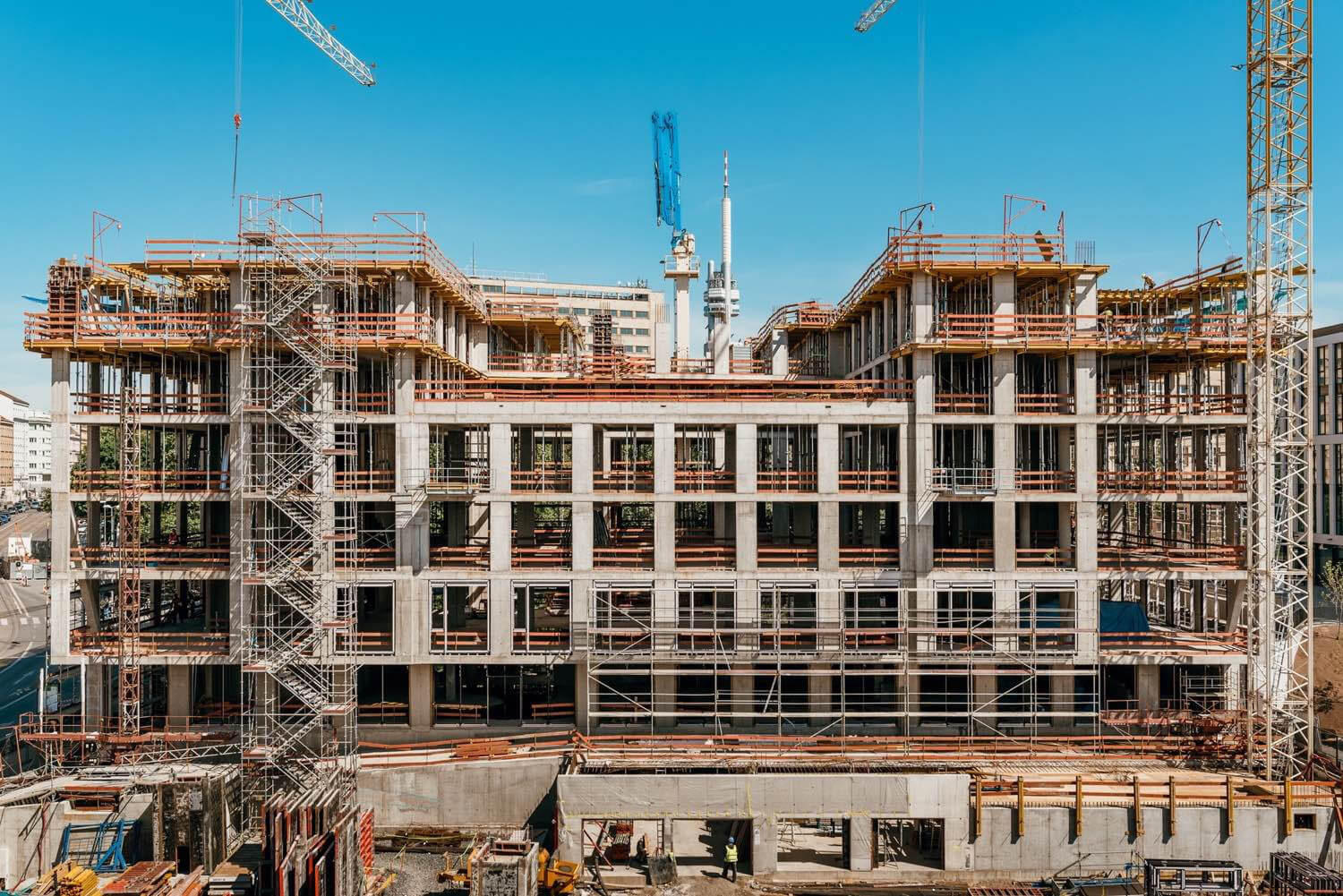
Pressure on residential development is also reshaping the urban role of office buildings. In new brownfield projects such as Rohanský ostrov or the area around Hlavní nádraží, offices are increasingly serving as sophisticated “buffers” against noise and urban activity. Developers place administrative buildings along busy roads, where they fulfill a dual function: providing sought-after office space while also acting as an effective barrier against noise and dust. This, in turn, creates an opportunity for high-value residential developments within quieter inner courtyards.
This trend is visible across a number of locations. We see it in Karlín, in the Holesovice project Port7, and it is also well illustrated by the redevelopment of the former Transgas site near Panorama Business Center by the main railway station, where new developments combine modern offices with premium residential units. Similar approaches are expected in planned projects in Florenc and the wider area around Masarykovo nádraží.
At the same time, the office vacancy rate has declined to 5.9%, the lowest level since early 2020. In some prime locations, the figures are even lower: Praha 2 reports vacancy of just 1.8%, while Praha 8 stands at 3.3%. In practice, this means that companies seeking high-quality office space in attractive locations face a fundamental issue—suitable spaces of the required size are virtually unavailable.
The main reason behind the slowdown in office development is economics. The value of one square meter of office space ranges between €3,000 and €4,000 (CZK 75,000–100,000). By comparison, new apartments in Prague cost on average CZK 180,000 per square meter, and in prime locations can reach up to CZK 300,000. Developers therefore have a clear incentive to build residential projects.
In locations further from the city center, such as Prague 4 or 5, where office rents are around €15–16 per square meter, office development is not financially viable. For such projects to make sense for developers and investors, rents in these areas would need to increase by roughly 25%. Until that happens, office buildings outside the broader city center will remain unattractive for investment.
Consider a mid-sized building in Prague 5 as an example. Average rent in this area is around €16 per square meter, translating into €192 annually. With a capitalization rate of 6.5%, this implies a value of approximately €2,950 per square meter—roughly CZK 75,000. However, constructing a new office building today costs between €3,000 and €4,000 per square meter.
Currently, development is viable primarily in prestigious and well-connected locations, where developers target rents between €25 and €30 per square meter. Such levels are affordable mainly for high-quality tenants, for whom location is critical in attracting talent. Companies understand that, for example, it is difficult to attract a skilled IT specialist to an office on the outskirts of Prague, making higher rents a worthwhile investment. Despite higher land costs and more complex permitting processes, central locations continue to make economic sense for developers.
In our view, the market will likely reflect a combination of several strong trends in the coming years. First, purely office-based developments will stagnate, with the exception of the most prime addresses where tenants are willing to pay a premium. Second, we expect to see an increase in conversions. Older office buildings that are reaching the end of their lifecycle and require significant technological upgrades will often be more economically viable to convert into residential use.
All of the above trends—limited new supply, relatively low vacancy, a shift in developer focus toward residential projects, and sustained demand for high-quality office space in prime locations—are expected to drive rental growth. This, in turn, should eventually restore the economic viability of new office developments. At Českomoravská Nemovitostní, we believe that Class A buildings in prime locations will become even more attractive assets in the future. Limited supply combined with stable demand creates favorable conditions for gradual growth in both rental levels and property values. This is not a sudden shift, but rather a gradual trend that will unfold over the coming years.